Our AA 4th Step Worksheet and Resources
Downloadable Alcoholics Anonymous Step 4 Worksheet and More
All Alcoholics Anonymous (AA) chapters have the same goal: providing members with a clear pathway to ending their addiction struggles. Some Alcoholics Anonymous groups focus on open, honest looks at alcohol or drug use through discussion alone, assigning worksheets as “homework.”
Others complete action steps using the worksheets or other resources, like our Fourth Step Inventory Worksheets, during the meeting. How (and where) you complete self-reflection worksheets depends on the meeting type and the preference of the group’s chairperson.
Icarus Behavioral Health Nevada agrees that Alcoholics Anonymous can be a helpful tool throughout the recovery process. While we don’t agree with some of the program’s legacy language, such as the use of outdated terms like “alcoholism” or “addict,” we do agree that it supports overall healing.
We also recognize that needing to submit to a Higher Power may not be inclusive for some people. But the program can spark personal growth in most people once you set aside those limitations.
We’ve developed a Fourth Step Inventory Sheet and an Identify Resentment Step 4 Worksheet to address the issues AA calls “character defects” as you take this journey.
Get Effective Inpatient Treatment at Icarus – Call Now!
Our Printable AA Step 4 Worksheet is a Downloadable Resource
The 4th step of AA asks members to undertake a “searching and fearless moral inventory” process. It’s an important step, as the defects or flaws that individuals identify will require further specific actions later, especially in Step Five.
While the Twelve Step program uses the labels “defects” or “flaws,” they would better be called shortcomings. Ask yourself: Where do I fall short? What are some better actions I can take? You’ll look at the emotions and actions in your life today and in the past.
AA Fourth Step Inventory Sheet
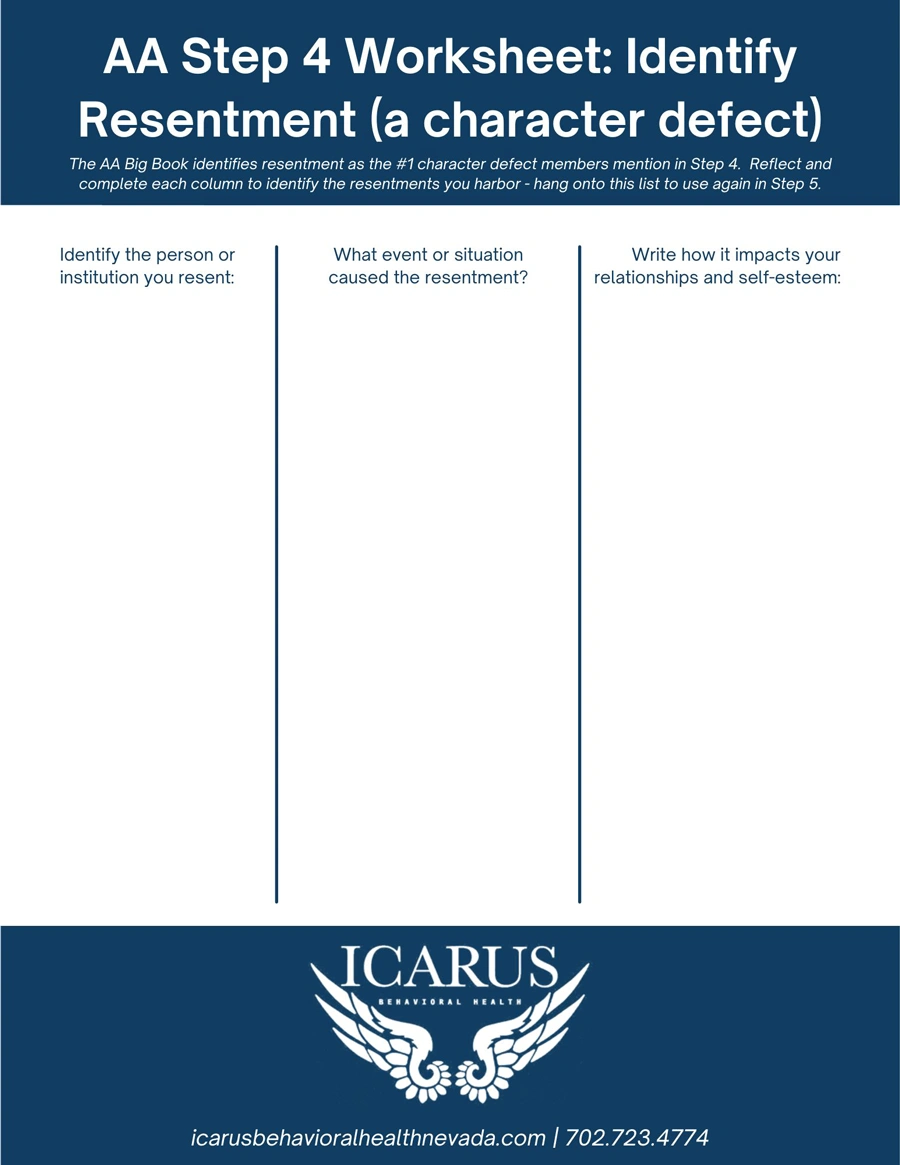
Taking a personal inventory of one’s past behaviors can be a painful experience, but it is a critical part of getting clean and sober. The goal here is emotional sobriety – a personal growth that helps you become emotionally ready to continue making positive changes.
While this activity will almost certainly stir up negative feelings, it sets you up to replace them with positive qualities as emotional healing continues.
AA Step 4 Worksheet: Identify Resentment
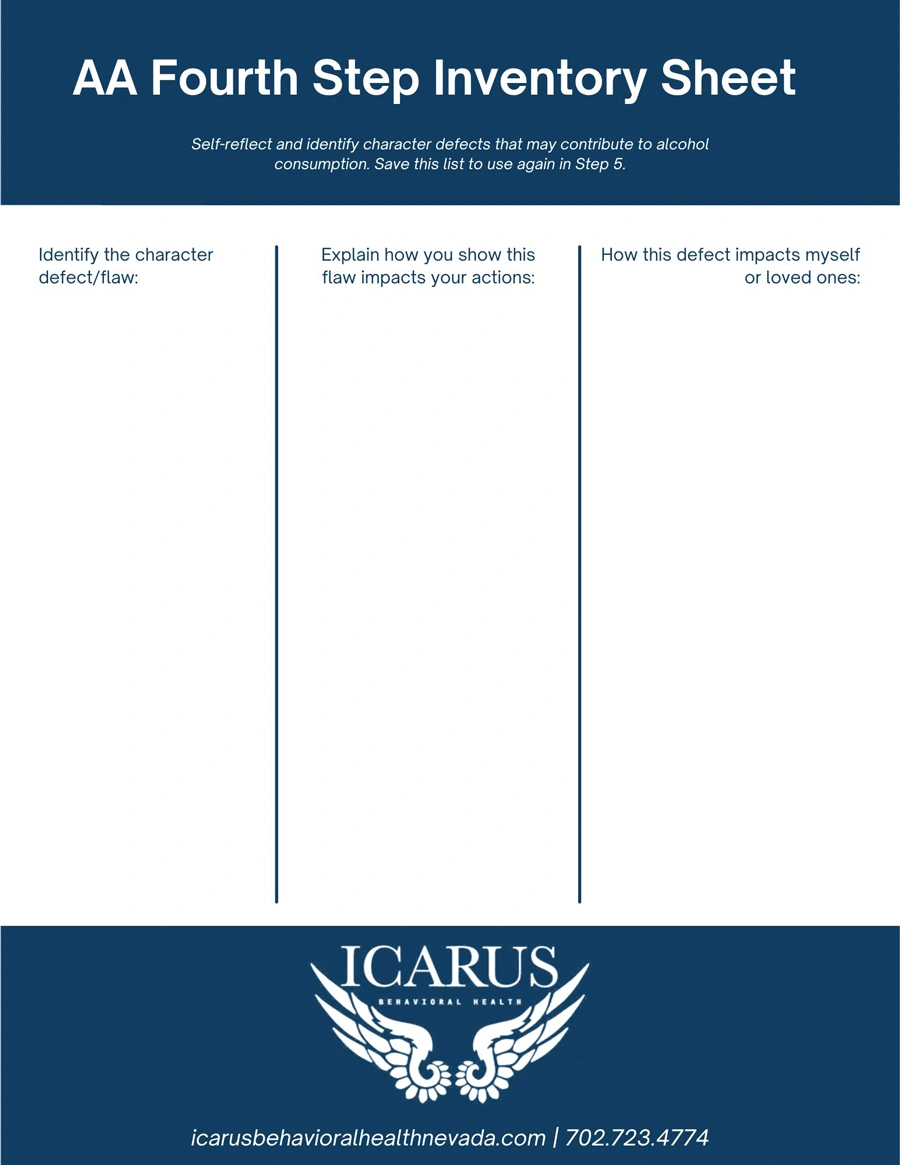
The AA Big Book points out that resentment is the most commonly shared character defect among its members.
Holding onto resentment can become, for some, an excuse to justify past actions. That’s why we are providing the necessary materials in this worksheet to help you identify why you feel anger about some situations that trigger addictive behavior.
Introduction to the AA 4th Step Worksheet
Don’t look at the AA 4th Step Worksheet and Identify Resentment worksheets as mere forms to complete. These are part of a guided process designed to help you dig deeper inside and consider your thoughts, actions, and relationships.
When you write things down, you have an objective means of looking back at them in future program steps. The “fearless moral inventory” isn’t a punishment or staying stuck in the past; it’s instead about preparing the way for a spiritual awakening and living a better life.
We break each worksheet into three columns, allowing you to take a “small bite” approach to each item you list, considering one aspect of your personal inventory at a time.
Case Study: Maria, a Recent College Grad


We will share some completed 4th step work in the next sections, using past client ‘Maria,’ a recent UNLV graduate who attended our outpatient program, as our example. Maria looked back at her past mistakes while recovering from alcohol and prescription painkiller addictions.
The self-discovery was, indeed, challenging for her – she explained how it was tough to admit the exact nature of her behaviors. In her newfound self-awareness, Maria realized how much she’d hurt her family. Maria’s still in recovery today and has been sober for over a year with the help of her support group.
Here are examples of Maria’s completed fourth-step inventory worksheets:
Understanding the First Column of the Worksheets
In each of the Step 4 sheets, you’ll “name it,” a character defect or the thing that makes you feel resentful. Notice Maria’s examples; her one-word answers were sufficient as she reflected on her feelings and behaviors.
Completing the Second Column
The second column of both fourth step inventory worksheets we provide allows space for considering the “whys” of your behaviors or feelings. AA guidelines specifically state that these reflections do not excuse or justify the behavior, but allow the person to gain insight into the emotions that fuel drinking or drug use.
Reflecting and Filling in the Third Column
In the last column of each of our 4th step worksheets, you will admit the consequences. How have these behaviors impacted your daily living? Have you hurt another person, even unintentionally? The truth here can be painful, but honesty in completing your fourth step inventory worksheet is necessary to continue healing.
What Is a Searching and Fearless Moral Inventory?

This AA term refers to a written, honest look at your behaviors and negative feelings. These are often fueled by resentment or fear. Regardless, the process challenges AA members to push through an uncomfortable self-examination.
The Big Book of Alcoholics Anonymous explains the 4th step inventory as a way to look at our character as it truly is – not worse than we are, but not better, either. When we reflect and commit the truth to paper, members stop denying reality and increase the odds they’ll achieve sobriety.
Get Accredited Treatment Programs at Icarus – Call Now!
Why the Fourth Step Inventory Matters in Recovery
AA often calls completing a fourth-step inventory the “turning point” of their recovery program. Without exposing them, hidden fears, resentments, and other things can lead to a relapse. Completing the Step 4 inventory helps members remember what caused their actions and acknowledge how loved ones may have been impacted.
Understanding this makes a real difference in building accountability and forgiveness, qualities key to getting clean and sober. People who skip Step 4 often get stuck in the recovery process, unable to find inner peace.
Big Book Guidance on Step 4 Worksheets
The Big Book provides guidance to write down our shortcomings, instead of keeping track of them in our heads. It sends the message that we must examine how addiction has impacted our lives now and re-examine them regularly, identifying fear or anger before they become a trigger.
AA considers the moral inventory process critical to staying sober for life.
Understanding Character Flaws and Shortcomings

Besides the character or moral defects we’ve touched on – fear, resentment, anger – there are many others. These can include the following:
- Dishonesty
- Pride
- Selfishness
- Envy
- Laziness
- Self-pity
- Greed
- Lack of self-awareness
- Inconsideration
It’s important to point out that admitting these flaws doesn’t make you a bad or broken person. The admission merely reveals patterns you must work to change. In Step 4, name them; you’ll address fixing these shortcomings later in the AA program (Steps 5-7).
Tips for Identifying Character Flaws Without Shame
Labeling parts of yourself as “flawed” can hurt your feelings. But you shouldn’t feel ashamed. Instead, try viewing the shortcomings you identify as survival skills that no longer serve your needs.
Look at our case study, Maria, again as an example. She lied to her parents about her addiction because of her fear of letting them down. The fear that she thought protected her evaporated when they found out about her addiction. Thus, it no longer serves her. Removing fear and replacing it with open communication has allowed her to work on restoring trusting relationships with her family.
Remember that Step 4’s intent isn’t to punish you for past mistakes. Rather, this exercise should help you make the best decisions and shape behavior as you move forward. Once you frame the fourth step worksheet that way, it starts to feel like a more positive experience.
When all else fails, remember that you have an AA sponsor to support you. Their primary function is to offer encouragement in moments when you return to fear or self-doubt. Throughout the process, pay attention to self-care; you need to remind yourself that you deserve sobriety and reward yourself for all the hard work.
What are the Most Common Mistakes in Writing a Moral Inventory for AA Purposes?

As you begin your inventory, keep in mind that the goal is to remove addiction from your life for good. Here are some common mistakes that can lead to setbacks in the Alcoholics Anonymous program:
- Hiding the truth or omitting details out of fear someone will judge you harshly
- Avoiding fears, anger, or resentment, or skipping painful memories that you’d rather not revisit
- Being too vague or writing overly generalized statements without specific examples
- Trying to be too perfect or making the fourth step inventory sound good instead of being real
The best way to avoid these mistakes is to remember that the purpose is to make progress, not to expect perfection. Your inventory is only for you, your sponsor, and your therapist.
Keep in mind, the end game is freedom from addiction and, for some, eventual reconnection with loved ones.
Up To 100% of Rehab Costs Covered By Insurance – Call Now!
Start the Alcohol Use Disorder Recovery Process at Icarus
Icarus Behavioral Health Nevada, a JCAHO-accredited recovery center, offers inpatient treatment and intensive outpatient programs.
We listen to our clients and provide customized, evidence-based therapies to address the mental and physical aspects of addiction recovery.
Call us today – we’ll take time to hear your needs and provide you with a free, confidential cost-lowering insurance review.